
Drug Catalog - Product Detail
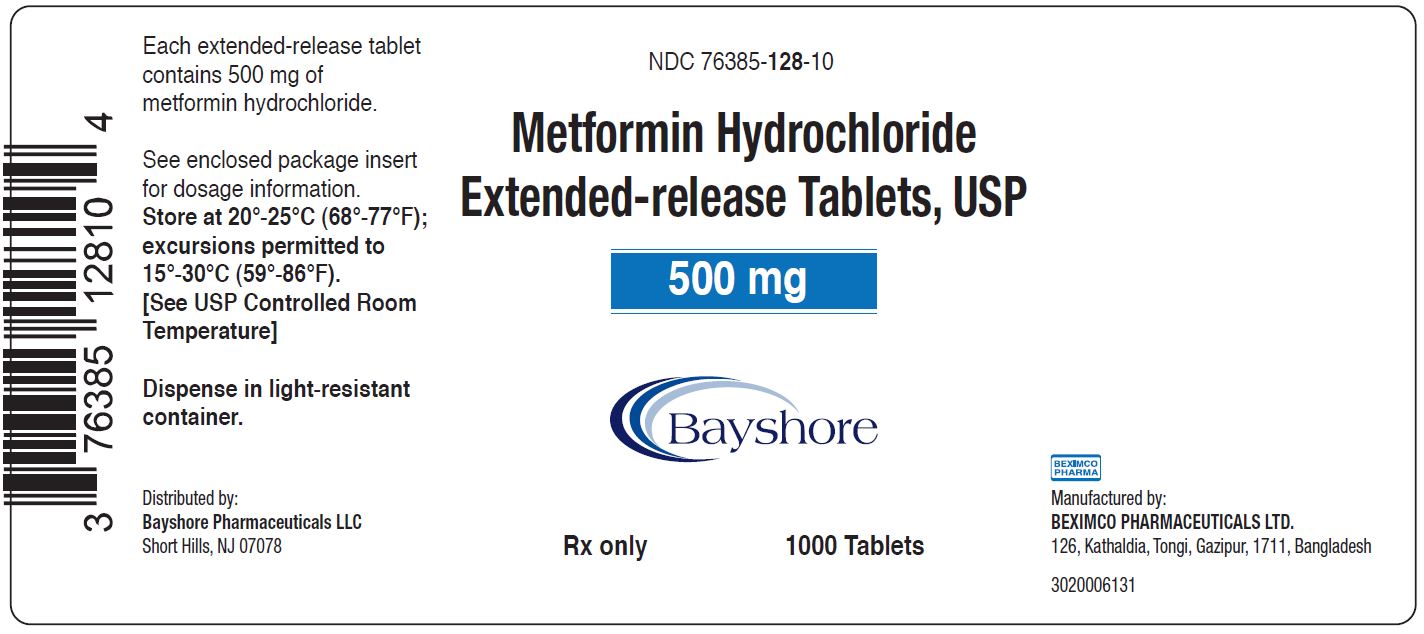
METFORMIN HCL ER G-XR 500MG TB 1000
| NDC | Mfr | Size | Str | Form |
|---|---|---|---|---|
| 76385-0128-10 | BAYSHORE PHARMACEUTICALS | 1000 | 500MG | TABLET |
PACKAGE FILES
Generic Name
METFORMIN HYDROCHLORIDE
Substance Name
METFORMIN HYDROCHLORIDE
Product Type
HUMAN PRESCRIPTION DRUG
Route
ORAL
Application Number
ANDA207427
Description
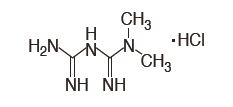
11 DESCRIPTION Metformin Hydrochloride Extended-release Tablets, USP contain the antihyperglycemic agent metformin, which is a biguanide, in the form of monohydrochloride. The chemical name of metformin hydrochloride is N,N- dimethylimidodicarbonimidic diamide hydrochloride . The structural formula is as shown below: Metformin hydrochloride, USP is a white to off-white crystalline compound with a molecular formula of C 4 H 11 N 5. HCl and a molecular weight of 165.63. It is freely soluble in water and is practically insoluble in acetone, ether, and chloroform. The pKa of metformin is 12.4. The pH of a 1% aqueous solution of metformin hydrochloride is 6.86. Metformin Hydrochloride Extended-release Tablets USP, contains 500 mg or 750 mg of metformin hydrochloride, which is equivalent to 389.93 mg, 584.90 mg metformin base, respectively. Metformin Hydrochloride Extended-release Tablets, USP 500 mg and 750 mg contain the inactive ingredients hypromellose, microcrystalline cellulose, povidone, sodium carboxymethyl cellulose, and magnesium stearate. System Components and Performance- Metformin Hydrochloride Extended-release Tablets comprises a dual hydrophilic polymer matrix system. Metformin hydrochloride is combined with a drug release controlling polymers to form a monophasic matrix system. After administration, fluid from the gastrointestinal (GI) tract enters the tablet, causing the polymers to hydrate and swell. Drug is released slowly from the dosage form by a process of diffusion through the gel matrix that is essentially independent of pH. The hydrated polymer system is not rigid and is expected to be broken up by normal peristalsis in the GI tract. The biologically inert components of the tablet may occasionally remain intact during GI transit and will be eliminated in the feces as a soft, hydrated mass. Dissolution Method: Test 24 metformin-structure-jpg
How Supplied
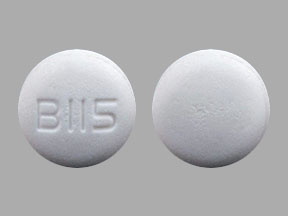
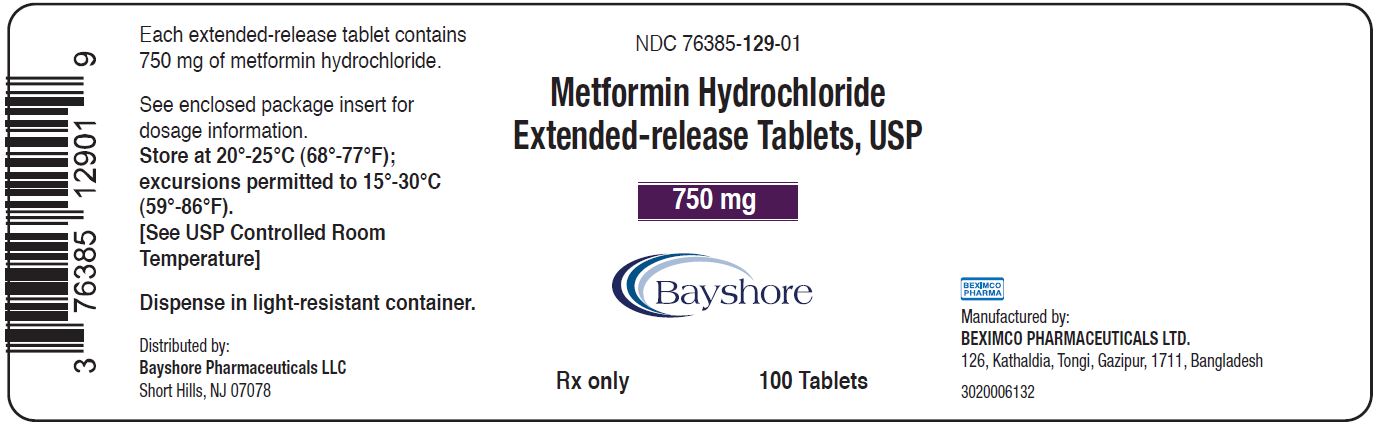
16 HOW SUPPLIED/STORAGE AND HANDLING 16.1 How Supplied Table 12: Metformin Hydrochloride Extended-release Tablets Available Strengths, Units, and Appearance Metformin Hydrochloride Extended-release Tablets 500 mg Bottles of 100 NDC 76385-128-01 white to off-white color, round, biconvex tablet, having ‘B115’ on one side and plain on the other. Bottles of 500 NDC 76385-128-50 Bottles of 1000 NDC 76385-128-10 750 mg Bottles of 100 NDC 76385-129-01 white to off-white color, capsule shape, biconvex tablet, having 'B116' on one side and plain on the other. Bottles of 500 NDC 76285-129-50 16.2 Storage Store at 20° to 25°C (68° to 77°F); excursions permitted within 15° to 30°C (59° to 86°F). [See USP Controlled Room Temperature.] Dispense in light-resistant container.
Indications & Usage
1 INDICATIONS & USAGE Metformin hydrochloride extended-release tablets are indicated as an adjunct to diet and exercise to improve glycemic control in patients with type 2 diabetes mellitus. Metformin Hydrochloride Extended-release Tablets are a biguanide indicated as an adjunct to diet and exercise to improve glycemic control in adults with type 2 diabetes mellitus. (1)
Dosage and Administration
2 DOSAGE & ADMINISTRATION Adult Dosage for Metformin hydrochloride extended-release tablets: • Swallow Metformin hydrochloride extended-release tablets whole and never crush, cut or chew (2.1) • Starting dose:500 mg orally once daily with the evening meal (2.1) • Increase the dose in increments of 500 mg weekly, up to a maximum of 2000 mg once daily with the evening meal (2.1) • Patients receiving Metformin hydrochloride tablets may be switched to Metformin hydrochloride extended-release tablets once daily at the same total daily dose, up to 2000 mg once daily (2.1) Renal Impairment •Prior to initiation, assess renal function with estimated glomerular filtration rate (eGFR) (2.3) o Do not use in patients with eGFR below 30 mL/minute/1.73 m 2 (2.3) o Initiation is not recommended in patients with eGFR between 30-45 mL/minute/1.73 m 2 (2.3) o Assess risk/benefit of continuing if eGFR falls below 45 mL/minute/1.73 m 2 (2.3) o Discontinue if eGFR falls below 30 mL/minute/1.73 m 2 (2.3) Discontinuation for Iodinated Contrast Imaging Procedures: • Metformin hydrochloride extended-release tablets may need to be discontinued at time of, or prior to, iodinated contrast imaging procedures (2.4) 2.1 Adult Dosage • Swallow Metformin hydrochloride extended- release tablets whole and never crush, cut or chew. • The recommended starting dose of Metformin hydrochloride extended- release tablets is 500 mg orally once daily with the evening meal. • Increase the dose in increments of 500 mg weekly on the basis of glycemic control and tolerability, up to a maximum of 2000 mg once daily with the evening meal. • If glycemic control is not achieved with Metformin hydrochloride extended- release tablets 2000 mg once daily, consider a trial of Metformin hydrochloride extended-release tablets 1000 mg twice daily. If higher doses are required, switch to metformin hydrochloride tablets at total daily doses up to 2550 mg administered in divided daily doses, as described above. • Patients receiving Metformin hydrochloride tablets may be switched to Metformin hydrochloride extended-release tablets once daily at the same total daily dose, up to 2000 mg once daily. 2.3 Recommendations for Use in Renal Impairment • Assess renal function prior to initiation of Metformin hydrochloride extended-release tablets and periodically thereafter. • Metformin hydrochloride extended-release tablets is contraindicated in patients with an estimated glomerular filtration rate (eGFR) below 30 mL/minute/1.73 m 2 . • Initiation of Metformin hydrochloride extended-release tablets in patients with an eGFR between 30-45 mL/minute/1.73 m 2 is not recommended. • In patients taking Metformin hydrochloride extended-release tablets whose eGFR later falls below 45 mL/min/1.73 m 2 , assess the benefit risk of continuing therapy. • Discontinue Metformin hydrochloride extended- release tablets if the patient's eGFR later falls below 30 mL/minute/1.73 m 2 [see Warnings and Precautions (5.1)]. 2.4 Discontinuation for Iodinated Contrast Imaging Procedures Discontinue Metformin hydrochloride extended-release tablets at the time of, or prior to, an iodinated contrast imaging procedure in patients with an eGFR between 30 and 60 mL/min/1.73 m 2 ; in patients with a history of liver disease, alcoholism, or heart failure; or in patients who will be administered intra-arterial iodinated contrast. Re-evaluate eGFR 48 hours after the imaging procedure; restart Metformin hydrochloride extended-release tablets if renal function is stable.