
Drug Catalog - Product Detail
DEXTROSE IV SOL 250MG/ML 10ML X 10
| NDC | Mfr | Size | Str | Form |
|---|---|---|---|---|
| 00409-1775-10 | HOSPIRA | 10 | 250MG/ML | SOLUTION |

PACKAGE FILES

Generic Name
DEXTROSE MONOHYDRATE
Substance Name
DEXTROSE MONOHYDRATE
Product Type
HUMAN PRESCRIPTION DRUG
Route
INTRAVENOUS
Application Number
NDA019445
Description
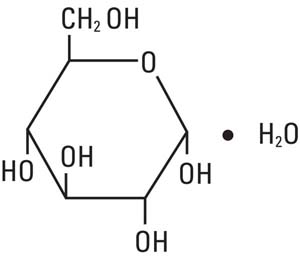
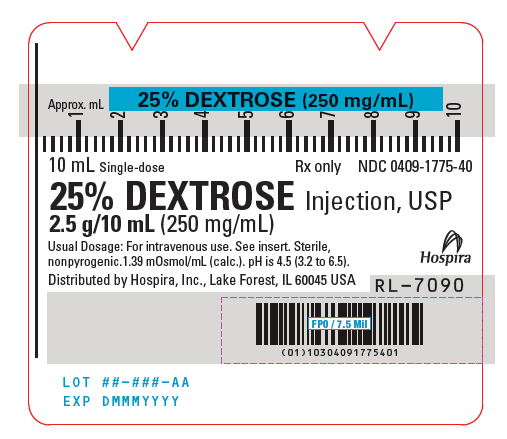
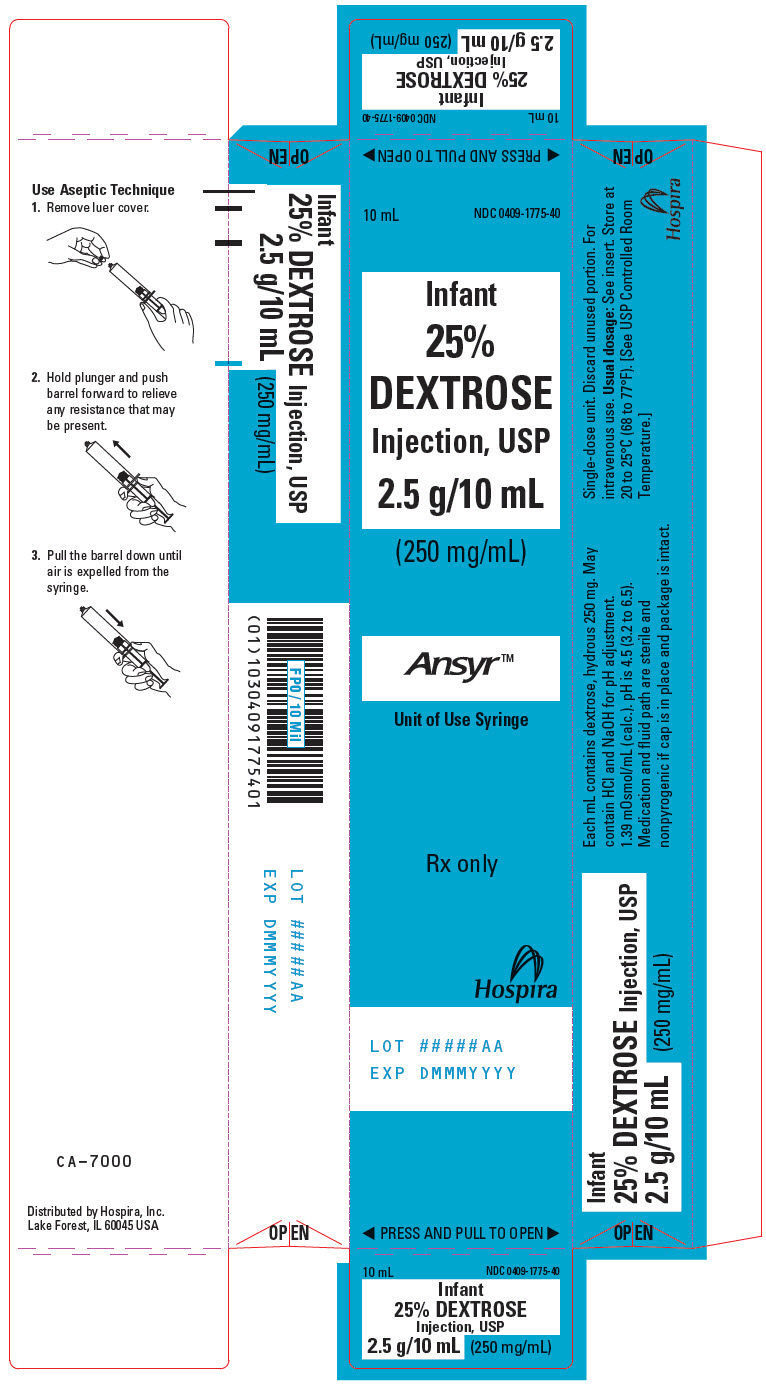
11 DESCRIPTION Dextrose, USP is chemically designated D-glucose monohydrate, (C 6 H 12 O 6 • H 2 O), a hexose sugar freely soluble in water, with the following structural formula: Water for Injection, USP is chemically designated H 2 O. The molecular weight of dextrose (D-glucose) monohydrate is 198.17. Dextrose Injection, USP (25%) is a sterile, nonpyrogenic, hypertonic solution of dextrose in water for intravenous injection. Each milliliter (mL) of fluid contains 0.25 grams of dextrose, hydrous, which delivers 3.4 kcal/gram (0.85 kcal/mL). The solution has an osmolarity of 1.39 mOsmol/mL (calculation) and the pH range is 3.2 to 6.5. May contain hydrochloric acid and sodium hydroxide for pH adjustment. The solution contains no bacteriostatic, antimicrobial agent or added buffer (except for pH adjustment) and is supplied in a single-dose Ansyr™ Plastic Syringe. Dextrose is derived from corn. structural formula dextrose, usp
How Supplied
16 HOW SUPPLIED/STORAGE AND HANDLING How Supplied Dextrose Injection, USP (25%) is supplied as a clear, colorless solution in single-dose syringe as follows: Unit of Sale Concentration NDC 0409-1775-10 Bundle of 10 Ansyr™ Plastic Syringes 25% (2.5 g/10 mL) (250 mg/mL) Storage and Handling Store at 20°C to 25°C (68°F to 77°F) [See USP Controlled Room Temperature.] To contact Pfizer’s Medical Information Department, please visit www.pfizermedinfo.com or call 1-800-438-1985. Distributed by Hospira, Inc., Lake Forest, IL 60045 USA LAB-1057-5.0 Logo
Indications & Usage
1 INDICATIONS AND USAGE Dextrose Injection (25%) is indicated for the treatment of acute symptomatic episodes of hypoglycemia in pediatric patients from birth up to 2 years of age. Dextrose Injection (25%) is indicated for the treatment of acute symptomatic episodes of hypoglycemia in pediatric patients younger than 2 years old. ( 1 )
Dosage and Administration
2 DOSAGE AND ADMINISTRATION • Only for intravenous infusion. Do not administer subcutaneously or intramuscularly. ( 2.1 ) • The recommended initial dose is 250 mg/kg to 500 mg/kg (1 mL/kg to 2 mL/kg). If clinically indicated, additional single doses of 250 mg/kg to 500 mg/kg (1 mL/kg to 2 mL/kg) may be administered. ( 2.2 ) • Infusion rate depends on the age, weight, and clinical and metabolic conditions of the patient and concomitant therapy. ( 2.2 ) • See full prescribing information for more information on preparation, administration instructions, and dosing considerations. ( 2.1 , 2.2 ) 2.1 Important Preparation and Administration Instructions • Parenteral drug products should be inspected visually for particulate matter or discoloration prior to administration. Do not use Dextrose Injection (25%) if the solution is cloudy or the seal has been broken. • Obtain blood glucose level prior to administering Dextrose Injection (25%). However, in cases of emergency, administer Dextrose Injection (25%) promptly without awaiting blood glucose test results. • Administer Dextrose Injection (25%) via slow intravenous injection into a central vein to reduce the risk of developing hyperglycemia and to minimize venous irritation [see Warnings and Precautions (5.1 , 5.3 ) ] . • Do not administer Dextrose Injection (25%) simultaneously with blood through the same infusion set because pseudoagglutination of red blood cells may occur. • Administer Dextrose Injection (25%) intravenously. Do not administer Dextrose Injection (25%) subcutaneously or intramuscularly. • Discard the unused portion. 2.2 Recommended Dosage The recommended initial dose of Dextrose Injection (25%) is 250 mg/kg to 500 mg/kg (1 mL/kg to 2 mL/kg). If clinically indicated, additional single doses of Dextrose Injection (25%) 250 mg/kg to 500 mg/kg (1 mL/kg to 2 mL/kg) may be administered. Select the appropriate infusion rate based on the age, weight, and clinical and metabolic conditions of the patient.